Monday, July 23, 2018

arts & crafts - thai edition

Last Friday we were back at Patara to survey again and have more thai language classes with Pi Poad.
Saturday was an “explore Thailand on your own” day. After a lazy morning, we all headed out to grab kao soi for lunch. Our taxi driver, Pong, joined us and was extremely helpful in helping us order our food and drinks. 

After lunch we drove to a silk factory where silk worms are grown and cocoons are harvested to make silk. We were able to see the traditional process of spinning silk which they do on a man powered wooden machine. 

After doing some shopping in their silk store, we all headed over to an umbrella factory. This wasn’t the kind of factory that you might think of though - everything was outside and each station was manned by one person who handmade each individual part to the umbrella. They made all of their paper from scratch and the each wooden component was hand crafted. There were also many talented artists that painted the umbrellas and also offered to paint any other object such as T-shirt’s, phone cases and purses. We each bought an umbrella and with the help of the artists, painted them with our own designs. 

We shopped for a little bit in the gift store after and then headed to a tailor. The tailors here are known to be able to sew a three piece suit in a day or two. Some people walked around the tailor and looked at fabrics while others wandered around and picked up some coffee at a nearby coffee shop. 

We then went to the most popular stop of the day - a grocery store with multiple American brands. Everyone grabbed candies, cookies, chips, crackers and more and headed back to the taxi. We all showed off each of our finds and shared snacks as we headed back to the resort before dinner. After resting for a little while, we loaded back up into a taxi and headed to the night bazaar to do some shopping and grab dinner. We walked over to a store that sold Tibetan singing bowls and learned how to use them to meditate. We grabbed some sunglasses and other souvenirs before grabbing some street dumplings. 

After a late, but fun, night we headed aback to the resort to get some sleep before heading out to a cooking class early the next morning. 


Hey y'all it's Grace!

So this weekend was full of fun adventures ! Ireland and I woke up early Saturday morning to go to a yoga studio. We took a red truck by ourselves to a hole in the wall studio that was absolutely stunning. The instructor and his wife lived above the studio in a tree house sort of set up along with their two small dogs. After an hour class, we headed back to the hotel to meet up with the rest of the group and continue with our day. One of my favorite parts of the day was going to the umbrella factory where we were able to paint our own umbrellas ! 
We head back to Patara tomorrow, and I’m hoping that I get to see chompoo (the elephant I was paired with last week ) she’s a seven year old female who loves to play in the mud and water and is a flirt with the camera. I absolutely adore her ! 


Anyways, I still love Thailand and have enjoyed all the adventures so far and can’t wait for future ones !


Hey, Anneliese here! 
This weekend was incredible and filled with so many great memories! One of my most favorite activities was visiting the silk factory. We learned how silk is made and saw women using wooden machines to make the silk. The pieces were gorgeous, and the store was filled with soft and colorful fabrics! I even treated myself to some silk hair ties. Another one of my favorite activities was painting the umbrellas because the artists helped us stencil a design to paint and all of our umbrellas were so unique and showed our personality. At the end, one of the artists "beautified" all of our umbrellas by adding details and even writing out "Thailand". I really liked the silk and umbrella factories from Saturday because they were such a unique part of Thai culture! Overall, this weekend was great and I need our time here to slow down!!

Thursday, July 19, 2018

Tongue THAI-ed


Today was our second day surveying at Patara Elephant Farm. We arrived around 8:15 and awaited for participants to arrive. The baby elephant, Tonwaa, really wanted to play with us because was full of energy this morning and started to run around like the cute little toddler she is. We met a lot of very nice families from all over the United States as well as people from the surrounding countries of Thailand. After the first round of participants were oriented, we sat down for a Thai lesson with Pi Poad. We learned many question words as well as various vocabulary words that we can use while ordering dinner or speaking to the locals.

A few words we learned today were:
    
water- nam
milk-nom
snack- ka nom
spicy- ped
delicious- a roi
mango- mammoa
elephant- chang
pineapple- zaparro


In our first Thai lesson on our first day here we learned that if a female is speaking, she should end her sentence with "ka" and if a male if speaking, he should end his sentence with "krup". These endings show politeness and signal that the sentence is over.

After our Thai lesson, we started to make a lesson plan to teach English to the mahouts. We made a list of words and phrases that are commonly used when describing elephants and questions that tourists commonly ask the mahouts during their experience at Patara. We split the lesson plan into five sections so teams of two people from our group would all get the chance to teach the mahouts. We then met with the veterinarian at Patara. She gave us a short presentation on the treating of the elephants. In one case, an elephant had a tumor under her bladder and needed it to be removed. In another case, Boon Pak had food stuck in his esophagus. The veterinarian showed us pictures and the process of how they managed to help the two elephants. It was impressive hearing that special tools had to be made to accommodate the size of elephants. Both elephants recovered well and are now healthy.

We then went to lunch at Thachang Hill, which was a beautiful restaurant that overlooked the forest. The food was great but the biggest highlight was their ice cream! We each ordered something different and got to try the classic flavors as well as the exotic flavors like taro. One we returned to Patara we learned about singing bowl therapy.  Singing bowl therapy reduces stress and mental and emotional strain. The bowls are struck with a mallet to produce a ringing sound. It has been used on an elephant who was previously was in a circus and had trauma. She was rejecting her baby and refusing to nurse her baby. After several sessions of the therapy her mood improved and she starting caring for her baby.


Hey guys its me Ireland again!
Patara has been incredible. Our day as a tourist on Tuesday was honestly the most fun and exciting thing I have experienced. My elephant for the day's name was Chana. He was a handsome and smart 10 year old that was definitely a little trouble maker! He loved getting into other elephant's business and seeing what they were up to and eating everything in sight. Riding Chana was so much fun and honestly was like the best roller coaster I've been on! I'm glad we've gotten to go back to Patara these past few days because in our spare time we get to see our elephants again. I'm looking forward to this weekend when we go explore the city for ourselves, come back for updates to see what we find!


Hi it's Juli again
These past few days at Patara has been one of the best experiences of my life. My elephant's name was Saitong. She is 30 years old and a mother of two elephants. When I got there, she was in the middle of trying to mate with another male elephant. A mahout told us we were lucky that we got to see it happening, it's not everyday that visitors get to see the mating process. Saitong was a gentle elephant and I had a great time spending my day with her. I want to say khop khun ka (thank you) to Saitong's mahout who made sure I had a safe experience. I hope I get to see Saitong again before I leave Thailand. 


Wednesday, July 18, 2018

Survey Says... Appe-THAI-zing!


This morning was our first day of conducting surveys at Patara Elephant Farm. The surveys evaluate tourists' knowledge of safe travel practices and environmental awareness while engaging in ecotourism activities. We learned more about these topics in our guest lecture on Monday with Dr. Watcharapong and Dr. Parichat Salee. They explained some prominent health issues in Chiang Mai related to travel medicine, which provided a deeper understanding of the purpose of the survey.


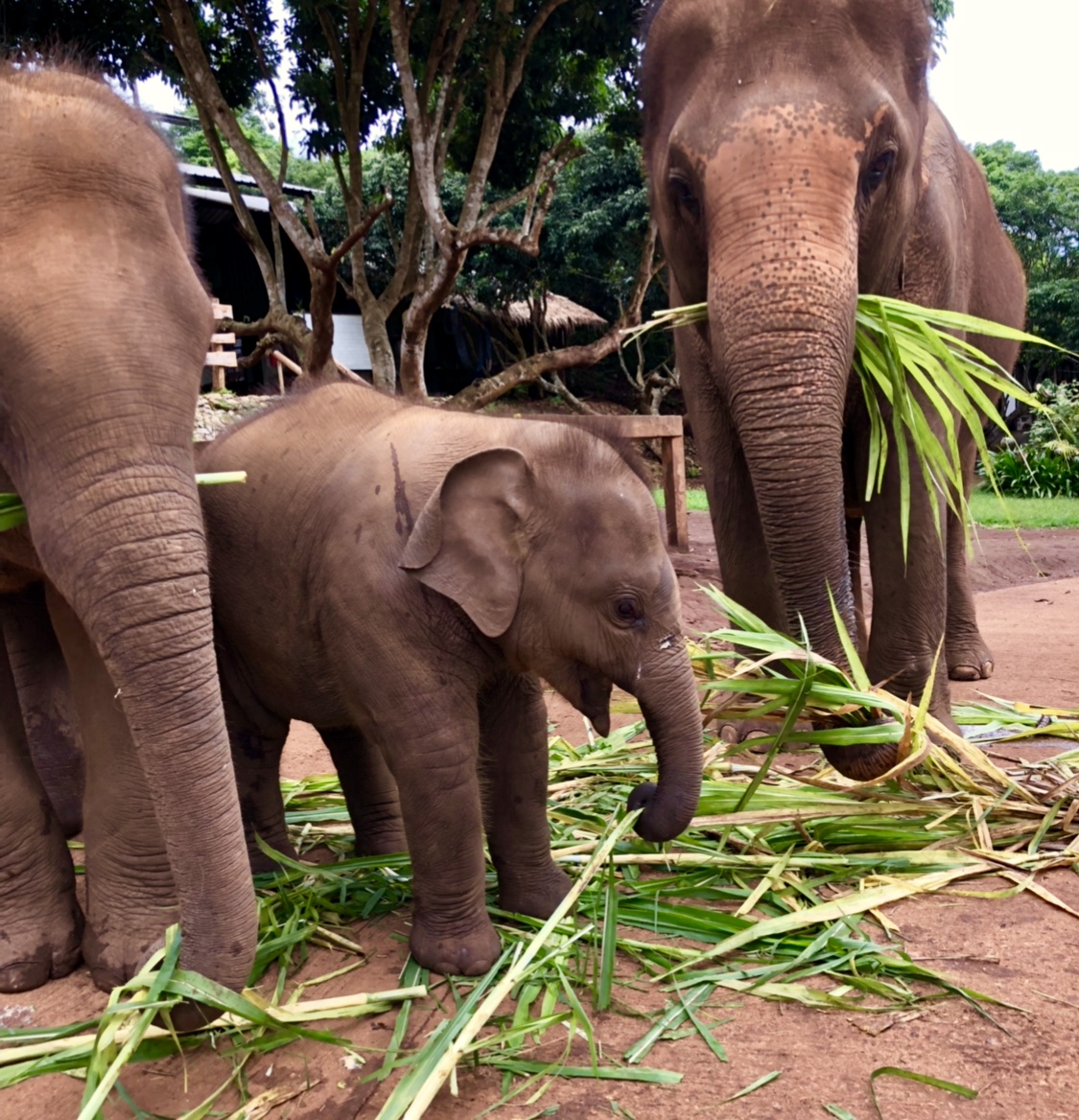
To distribute the surveys, we split up and met up with different groups on tour across the elephant farm. We had several volunteers from all over the world, including the US, Belgium, and China. During breaks at our “ground base” we got to play with the mama and baby elephants that congregate and eat there during the day, which, of course, are adorable :)


In exchange for permission to conduct the surveys at Patara, the group was asked to teach some of the Mahouts (elephant trainers) some useful English phrases and vocabulary. Lesson planning compromised of gathering vocabulary and questions that we thought, through our recent experience as an elephant trainer for a day, a Mahout who knew little English would need to learn to interact effectively with English-speaking tourists. We took our body of words, categorized them, and designated a pair of us to each category. We are excited to teach them tomorrow!

Tonight we went to the Old Chiang Mai Cultural Center, where dinner was served prior to the show. The meal consisted of red and green chili sauces, pork stew, Thai fried chicken, and sweet fried banana. It was fantastic!


The female dancers were beautiful and graceful, and the music was entrancing to watch and hear. The women performed delicate moves with intricately coordinated hand twirls and dips. The men's dances were fast-paced and exciting. We sat at the edge of our mats while watching one male performer balance and spin knives around his body. During one dance, members of the audience were invited to dance on stage, and a few of us got the courage to go up and do it. It was an awesome time after a long day of work.


Catherine and John

Tuesday, July 17, 2018

Elephants DO Swim With Their Trunks On!

Sam and Sarah here! It's been over a week since we last posted, but we've been busy exploring Chiang Mai, visiting temples, eating more amazing food, and learning from some of Thailand's best health professionals. Our friends have done such a great job documenting all of these adventures for you all, but we have the pleasure of writing about our day at Patara Elephant Farm.
Our elephants were so cute, even if they weren't the best at posing for photos

Each member of our group was assigned their own personal elephant to help take care of for the day. After learning several commands in Thai and going over safety information, we fed our elephants bananas and began bonding with them. It was during this time that we had the opportunity to learn first hand about elephant mating. The mahouts are the guides at the Patara Elephant farm who have more than 10 years experience working with elephants.The mahouts told us that this is prime mating season, and that the male elephant was only 11 years old so this was his first season as a reproducing male. We also learned that female elephants only menstruate every four months and that gestation is approximately 19-23 months. In addition, mother elephants will nurse their babies for 3-4 years after birth. All of these factors contribute to a low inter-birth interval (IBI) for elephants, meaning that they cannot reproduce quickly. This is especially problematic as the number of elephants in the wild and in captivity has been decreasing dramatically in recent years.


Grace, Ireland, Catherine, and Anneliese bonding with their elephants

Patara Elephant Farms aims to rescue elephants from unhealthy/unsafe situations and strives to provide recovery for elephants in poor health. Their main goal in doing this is to promote health and wellness so that elephants can reproduce. The long term goal is to reintroduce the elephants back into the wild, but to do so in a manner that is best for the elephant (for example, for some elephants it is not in their best interest to be released back into the wild). It is also important to note some of the elephants at Patara are simply donated, they come from families or businesses that treat them well but for various reasons can no longer care for them.

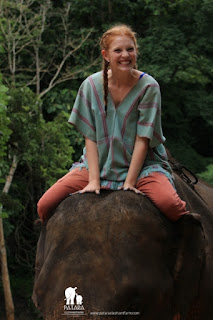
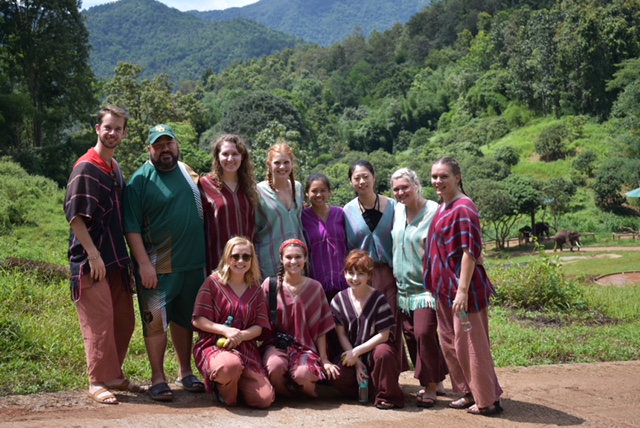
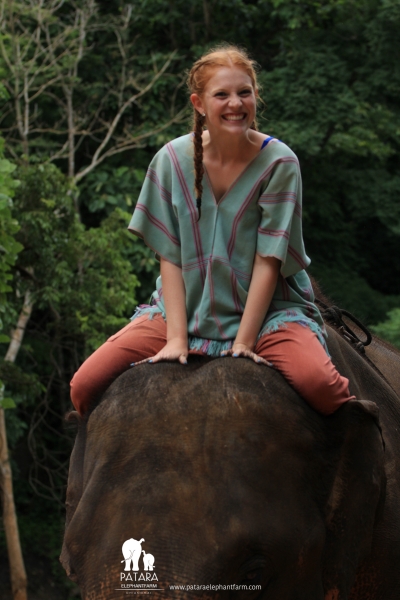
The atmosphere at Patara is one of family, everyone working there is blood related or has worked there for so long that they are practically family. Everyone plays a specific role: the men are usually mahouts while wives, sisters, and girlfriends run the gift shop, admin, and make the beautiful clothing we wore to ride the elephants. Everyone agreed that we all really loved the hand made shirts, they were so comfy and colorful-the perfect elephant riding wear!


Kayla sporting our beautiful and functional riding shirts

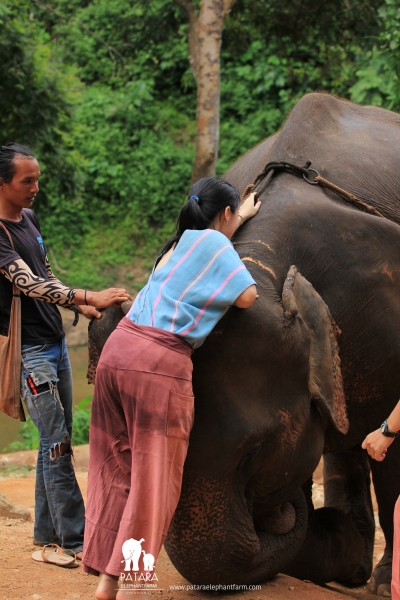
After feeding and our unexpected yet informative crash course in elephant mating, we took our elephants down to the river for bath time! Elephants should bathe once a day as it helps keeps their skin free from parasites but also helps to cool down their internal body temperature. Scrubbing the elephants was hard work, but incredibly rewarding because we were able to play with the babies afterwards. The most important thing we learned from bath time was that elephants DO swim with their trunks on ;)


Sophie and Juli bathing their elephants

Prior to meeting our elephants for the day, a baby elephant near the check in area at Patara charged Dr. M! Unfortunately this event was not caught on video, but thankfully our fearlessly leader landed on his feet and was unhurt by the feisty baby elephant.
Dr. M with a baby elephant (not the one that charged him)

As bath time concluded, we donned our riding gear and mounted our elephants-and headed out into the jungle! Not really we followed a clearly specified path, but it was a rather bumpy ride. To properly ride an elephant one has to sit directly behind the ears where the neck and head meet. Your knees rest atop the ears so that you can use your feet to direct the elephant forward by tapping the back of the ears. Sophie and her elephant, Arun, started out leading the pack at a nice leisurely pace. But soon Arun, who is a 4 year old female elephant, decided she wanted to pick up the pace. Sophie and Arun arrived at lunch 10-15 minutes before the rest of us.
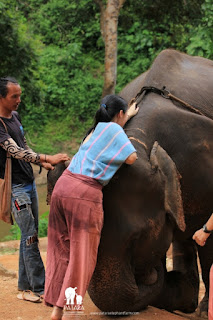
Juli utilizing the trunk to mount her elephant

John, looking fly as usual

Ireland enjoying spending time with her elephant

Grace enjoying the beautiful Thailand views

Look at the difference in size between Sarah's elephant and Sam's!

Elephants are incredibly intelligent creatures as they can understand many different commands while assessing their surroundings to determine the best route possible. This is mainly accomplished by using the trunk to feel along the ground as the elephant walks.

Lunch was a beautiful array of chicken, local fruits, rices, and vegetarian spring rolls. Unfortunately, we did not realize the Dr. M and Pi Peter and Pi Poad would be joining us so most of the food had already been consumed before they arrived on the hilltop to eat lunch with us (note to self: buy Dr. M and the Pi's dinner later this week).

Lastly, we said goodbye to our precious elephants, who we had grown to love so much during our time with them. As we were leaving, many of us got goodbye kisses from our elephants-so precious!

Hey guys it's Sam! Today was great! At Patara I loved learning about elephant health and the different signs to look for when assessing an elephant. We learned how to ride them, how to tell if they were friendly, and how to wash them so their skin is healthy. My favorite part was befriending the elephants. My elephant was named Pansa (pahn sah), and I love her. I will name my first child after her because I love her so much. We were each given a personal elephant based on personalities and size. Pansa was only 6 years old so she was a tiny thing compared to Sarah's elephant who was 35 years old.

We were instructed to befriend them by feeding them and saying specific words. First, we had to hold a banana and say 'bon' (up), place the banana in their mouth and then say 'dee dee' (good boy/girl) and pet them under the eyes when they ate. We were given baskets full of bananas so the elephants would bond with us. Then we bathed them in the river and had to learn how to do the different brush strokes for their bodies, always with the grain of the skin. After we washed them we got to swim with the momma and baby elephants. It was so hard to stay on the elephants because they roll around in the water. Then we rode the elephants to the hill top for lunch, which was amazing. We were served rambutans, which as you know are my favorite! Today was one of the best experiences of my life and I will always love Pansa!

Hi everyone, Sarah here! Today was so amazin! I loved spending time my elephant, Boon Put who is a 35 year old male and the biggest elephant in our group. He definitely enjoyed being the leader while walking and frequently enaged in races with other elephants for the front spot. His mahout described him as strong-willed, determined, not always the best listener, and willing to do pretty much anything (including disobey direct orders) for food... remember, the elephants were assigned to us based on personality :)

Something that really stuck with me from today was our introductory talk before we even met the elephants. The Patara Farms employee who spoke to use about safety and Patara's mission, also touched on the 'trendy-ness' of conservation causes, especially via the internet. He believes that conservation efforts striving to really make an impact should encourage people to experience and know first-hand what they are aiming to conserve. This is why Patara Farms offers elephant experiences, so that people can see the difference between simply giving to causes and actually living in way that promotes conservation As a part of this field school, which is centered around the idea of One Health, the health of animal populations has been discussed: this being important because human and wildlife come into contact often. Understanding the role of each animal, elephants included, in the field of health is incredibly important for effective disease prevention and if necessary, disease control responses. We will be spending more time at Patara in the next few weeks so I hope that we will all have the opportunity to explore these topics further.

Thanks for reading our blog post! We'll see you next time!

Sam and Sarah


Monday, July 16, 2018

Not an Irrelephant Weekend


Not an Irrelephant Weekend
By: Kayla Wilson and Sophie Brown

We’ve been here in Chiang Mai for a week now, and every minute has been an adventure of a lifetime. This weekend we took a break from lecture style learning at our lovely second home, ISDSI, and experienced some lovely local tourist attractions.


This Saturday morning, we had an early start to an amazing day. We headed off to the Thai Elephant Conservation Center that was located about an hour outside of the city. When we got to the center, we were greeted by a lovely staff and a beautiful building. There were pictures of elephants everywhere, and all ten of us were genuinely overwhelmed with excitement. We first watched a video that was very happy and described how supportive the Thai people are of conserving the marvelous species. Eager as ever, we were then finally off to see the elephants.

There were about ten elephants awaiting our arrival. They were ready for bath time. They splashed, swam, and had so much fun interacting with the guests and spraying us with water. Then we headed to the main event, the elephant show. The show began when the elephants walked in playing the drums and waving flags with their mouth. They demonstrated several different learned behaviors including how elephants are used in logging, walking backwards, running while carrying logs in their mouth, throwing balls into a basket, painting, and putting hats on their owners. It was really interesting to observe which of these learned traits were necessary for the health of the elephants and which were taught for the enjoyment of the tourist. The second portion of the visit to the Conservation Center consisted of a visit to the elephant clinic. The center provides free medical care to surrounding areas for privately owned elephants. I thought this was amazing, and it made me realize that the tricks taught to entertain the tourist are very important - they provide a means for making the free veterinary services. This trip to the Conversation Center was very valiant and I really appreciated the steps taken by the Thai people to ensure that elephants thrive in Chiang Mai for years to come. 

After a weekend packed with exploring Chiang Mai’s history, cultural heritage, and modern day shopping, Monday eased us back into education. Our group had a block of free time this morning, and took advantage of that by enjoying some Thai massage. The Thais are known for their strict adherence to modesty and this is really obvious when you experience their massage practices. Unlike western massages, the client wears a full, traditional Thai outfit, with long cotton fisherman pants, and a cotton top. For those who are uncomfortable with America’s practice of stripping down completely, and covering with a towel, Thai massage (at least in Thailand) would probably suit them well. A towel is still laid over the midsection of the client to add another layer between the massage therapist’s hands, and areas that could be more sensitive or intimate for some people. Thai massage is pretty well known as being SUPER rough, and not a lot of people can handle it. While it was pretty intense, it definitely wasn’t the level of intensity any of us were scared it would be. It worked out all of the knots and kinks that all of us have picked up from traveling, and sleeping on weird new mattresses. All of us were SO RELAXED afterwards. It might just have been the best experience we’ve had thus far (that’s a lie, everything is great here).

Hi guys, it's Kayla! This week has been full of so many amazing adventures. Personally, I am not an anthropology major nor have I ever taken a global health course. Due to this, I have learned so incredibly much over the past seven days. I have absorbed every minute of the time we've spent inside of the classroom and seeing firsthand what health means for the Thai people. I think my favorite part of this trip so far has been developing relationships with my peers that I am on this trip with. All nine of the students who I get to share this experience with have been so awesome. We get to share some of the most memorable moments of our lives, support each other through the culture shock we have experienced, get to know one another on a very deep level, and have intellectual conversations that continue to help us grow as pre health students. They have been great and I am so glad that their presence has allowed me to smile and laugh constantly. This trip has been the experience of a lifetime and I cannot wait to spend two more weeks in this amazing country. Thank you mom and dad!! :-) 

From Sophie: Hey mom I’m alive. Thailand is awesome. Love you and see you soon.


Friday, July 13, 2018

Medicine in the Jungle

After a few days here in Chiang Mai, we've come to consider ISDSI our second home. It's where we meet up with Pi Poad and Pi Peter, eat most of our lunches, and get to meet some incredible speakers.

This morning we had the amazing opportunity to meet and listen to Dr. Mitch Ryan, a doctor who works for Earth Mission Asia. Dr. Ryan is originally from the United States and went to Wayne State University School of Medicine. He later went into the Air Force to pay for his medical school and practiced medicine in Arkansas before deciding to take his career abroad. His wife, two sons, and himself moved to Northern Pakistan and lived in the Himalayan mountains where he helped treat local communities. After a terrorist attack on the local school, his family moved to Myanmar/ Burma to continue his practice in marginalized medicine.
In 1948, civil war broke out within Myanmar and continued to ravage the country until a cease fire in 2015. Although a cease fire has been signed, there continues to be unrest between the people and the military. This unrest has led to many people being displaced from their homes and living in the mountainous areas of Karen. The persistent fear from the war continues to effect the population by causing them to remain "on the run" rather than care for their well-being and overall health. While most people might seek medical attention for an infected cut or a broken arm, many internally displaced persons do not seek out medical attention for such matters. The mindset tends to remain " as long as I can walk I am fine". Some of the leading causes of death in the Myanmar people are death during childbirth, malaria, diarrhea, and respiratory infections. In the Karen Jungle, the maternal mortality rate is 721 per 100,000 live births while it is only 14 per 100,000 in the United States.

After working in this area, Dr. Ryan saw a need for more marginalized medical doctors and staff. Karen has 7 doctors per 100,000 patients while the World Health Organization recommends 100 doctors per 100,000 patients. So, Dr. Ryan set out to teach men and women from rural areas the practices of remote medicine in hopes of combating this medical crisis. He established the Jungle School of Medicine in 2015 to prepare physicians to accurately diagnose and treat diseases and injuries they commonly encounter in remote locations. The program is five years long and consists of learning basic science, english, and math as well as teaching and practicing clinical medicine. As you can imagine, living in the Jungle would have it's ups and downs. Upon asking Dr. Ryan his favorite and least favorite part of the job, he said that he loves being able to teach local people medicine and connect with the community but that his career comes with many hard choices such as deciding who to relocate to hospitals and who they have the funds available to treat. He also stated that he has loved the creative process of solving issues most doctors in a hospital would never encounter, such as needing to build a bridge across a river to get medical supplies. His discussion of marginalized medicine was definitely eye opening on the needs of refugees and the need of creativity in a remote setting in being able to treat and save the life of these people.

After lunch and the presentation, we visited an M2 (middle referral center) hospital, Sanpatong, that is the leading healthcare center out of seven districts in Chiang Mai. We were treated to a presentation about the hospital and the guidelines/regulations of treating people with HIV and tuberculosis. The hospital has 120 beds and serves over 75,000 people. With a staff of 427, this hospital is able to provide consult for TB, HIV, COPD, and STI's in the area. They aim to lower the number of people affected by TB and HIV by providing early screening, consultations, and family meetings for the local people. We were also able to see the on site labs and blood bank as well as a section of the hospital dedicated to traditional medicine.
One of the most unusual factors of the hospital was that the majority of the building was outdoors. While the majority, if not all, American hospitals are indoor settings and feel extremely sterile, Sanpatong has wildlife surrounding the hospital (and they occasionally wander in) and is open air. Another large difference from American hospitals was that Sanpatong showed very little privacy between patients. Most patients shared rooms and were not isolated from each other despite their illnesses. Even in the ICU, many patients shared one large space and appeared to have no desire to be separated.

After a long, but interesting day, we headed back to the hotel to rest and later head out to dinner and some late night shopping at a market in which we were all able to find delicious foods and souvenirs to remember the trip by!


Hey y'all, Anneliese here!
My favorite part about today was Dr. Ryan's presentation. He showed videos of the work his team has done in Myanmar/Burma and it truly is so incredible and eye opening. He has hand delivered babies in the jungle, treated many children's illnesses, and helped a girl with a broken leg receive care and the ability to walk. During lunch I had the opportunity to sit and talk with him more about his work. I admire and respect him so much for the hard work and dedication he has to improving the lives of others. He is very knowledgable about the cases they see in remote areas, and he has shown true self sacrifice in helping others. He packed up, sold everything, and left America to help and serve those that truly need it in remote areas. I think it is even more amazing how he is working to give back even more by training students to become future physicians in order to help their communities. Dr. Ryan's presentation on marginalized medicine was truly one of my favorite presentations on this trip so far because his work is so special and is truly helping to change lives.

Hey it's Grace!
Just like Anneliese, I loved Dr. Ryan's presentation! It was full of heart warming videos and showed what an impact the Jungle School of Medicine and the Earth Mission Asia have on the Myanmar population. Dr. Ryan's passion on the topic was visible through the presentation and created an engaging environment in which we were all curious how we could be involved. One of the most interesting parts to me were his stories about taking patients across the border illegally into Thailand in order to get them medical care such as surgery. He stated that many Thai officials and doctors were willing and eager to work with him to get these displaced people the medical care they needed. I thought that this was such an incredible example of the Thai culture in regards to the kindness Thai people have for others. I also loved that Dr. Ryan pointed out the importance of creativity in treating people when you have limited resources.
I also LOVED the market ! It was incredible to see Chiang Mai after dark ! All of the street venders were selling food and clothes and cute little souvenirs while a live band played. Overall, this experience has been so eye-opening and has been such a blessing to get to know Thailand and also get to know everyone in the group. Stay tuned for more amazing adventures and stories !


Also, we posted a picture of Pi Poad and Pi Peter! ( They're like brothers and so sweet )
Pi is a Thai word used to mean "older sibling" in which one would show respect to, so we use the term Pi for Poad and Peter to show our respect when we speak to them!


Thursday, July 12, 2018

Health, Hospitals, and Thai Hospitality


Today we went to visit two hospitals here in the Chiang Mai province. The first one we went to was a hospital at the tambon or sub district level. The Mae Sa Luang Health Promotion Hospital serves the 7200 people in its community. Tana, the director of the hospital, welcomed us with a performance from the School of Elders, a group of the local elderly people. The School of Elders is one of the groups that use the facilities in the hospital to promote health by doing activities such as dancing and playing musical instruments. For the elderly, it is critical that they stay moving or else the "chair and bed become [their] executioner." The hospital is two stories that has doctors come in one or two times a week to check up on the patients. There is always a shortage of money, tools, and people but the staff is still able to manage and treat everyone who needs treatment. After a short tour of the health promoting hospital we listened to a presentation about the facility. The hospital and community has specific goals and targets for each age group in the community. Young people are warned to stay away from alcohol and cigarettes while the elderly and taught to have a healthy diet and to exercise often. It was obvious that the people in the community had a strong commitment to their own health and the health of those around them.


We took a short bus ride to a primary health care center in a village not far from the Mae Sa Luang Health Promotion Hospital. We were introduced to the head of the primary health care center and saw some of the 18 health care volunteers that worked in that village. They showed us around their center highlighting the areas for first aid and screening. They demonstrated the exercise and therapy they have daily for their patients which include meditation, stretching, and dancing. After we participated in breathing exercises, they explained that that the purpose for the exercises is to increase mobility and strength and decrease hypertension and other health problems. After this visit, we rode back to the Promotion Hospital to listen to a lecture about the health care, protocols, and diseases the hospital encounters. They elaborated on the preventative actions they have enforced to help increase the community's health and well being especially in regards to dengue fever. They have a dengue prevention and control plan that emphasizes health education and a big cleaning day during the pre pathogenesis period. There were also many specific support groups that allow the community to help one another in regards to alcohol consumption and drug use.


After lunch, we drove to the general hospital in Chiang Mai about 20 minutes away from the Promotion Hospital. We were given a short tour of the facility and then met with Dr. Kittipham Chalom, a local epidemiologist. He gave us the background of the top ten diseases in Thailand and told us the action the country takes to diminish these outbreaks. They broke up the communicable diseases found in Thailand into different units so each section can have specific attention by different doctors like vector borne diseases, respiratory diseases, food borne diseases, etc. After laying the foundation of the disease problems in Thailand, Dr. Chalom went into detail about each disease including rabies, tuberculosis, malaria, and HIV. He stated its prominence and how Chiang Mai's number of cases compares to other districts in the country. Our afternoon ended when we returned to our hotel, EcoResort to rest before our evening discussion with Professor Muehlenbein and dinner.


Hey y'all, it's Ireland!!


Ever since we landed in Chiang Mai, I've enjoyed every minute of it. The food, the culture, and the people are just incredible. Today, we visited a promotional hospital and I must say I couldn't wipe the smile off my face. The people were so friendly and welcomed us like family with dance, food, and song. I loved this aspect of the facility because the people seemed to thoroughly enjoy their jobs and the people they are surrounded by. We then boarded a bus to visit the public health center in a nearby village where we participated in more dance and exercise (which was my favorite-I mean who doesn't like dancing?) It was amazing to see how many locals from the village volunteered their time to work at the health center. Thus far, I love Thailand and everything it has to offer. The pad thai, mangosteens, Thai tea are just a few of my favorites. I can't wait for our upcoming events with the elephants and temple visits!


Hello, it's Juli

I have loved these past few days here in Thailand! The food is amazing, the people are amazing, and what I have learned and experienced is amazing. Today was interesting in that I got to see two different kinds/levels of hospitals here in Thailand. People here in Thailand care for each other as if they are all one family. They make sure everyone takes their medication and that help is given to those who need help. They donate to the community in order to get more resources. It was obvious that they have put in a lot of effort to increase the health of the people and the environment. Concern for the health of everyone and everything around them would ultimately increase the health of their own person. Because not only does your health affect you, it can also affect the health of everyone around you.